serum (Fig. 1A). The anti-Cdc6 serum also co-precipitated the
A- and C-subunits of PP2A. Although the anti-PR70 antibodies
co-precipitated the A- and C-subunits of PP2A (Fig. 1B), a com-
plex between PR70 and Cdc6 could not be detected. The inabil-
ity to detect Cdc6 may be due to steric hindrance by the anti-
C-terminal antibody, because the C terminus of PR70 is
required for interaction with Cdc6 (see below). The association
of PR70 with PP2A and Cdc6 was also tested in co-immunopre-
cipitation experiments using exogenously expressed pro-
teins. FLAG-tagged PR70 was expressed in HeLa cells and
immunoprecipitated with anti-FLAG antibodies. Analysis of
the immunoprecipitates by immunoblotting showed that the
endogenous A- and C-subunits of PP2A and HA-tagged
Cdc6 co-precipitated with FLAG-PR70 (Fig. 1C). These
results indicate that PR70 can interact with both the PP2A
core dimer and Cdc6 in intact cells.
motifs that are conserved within the PPP2R3 family (supple-
mental Fig. S1
vating mutations of the EF-hand motifs. Point mutants were
constructed that had substitutions of amino acids involved in
calcium binding (28), including alanine substitutions at both
the x and y coordinates and a conservative change at the -z
coordinate (Fig. 2A). Wild-type PR70 bound calcium in the in
vitro
with wild-type PR70. Mutation of the second EF-hand (EF2)
severely reduced calcium binding, whereas the double muta-
tion of EF1 and EF2 nearly abolished the ability of PR70 to bind
calcium.
interaction with the A-subunit of PP2A (27). Therefore, the
effects of calcium on the interaction of PR70 with PP2A and
Cdc6 were determined. FLAG-tagged PR70 was expressed in
COS-7 cells, which were lysed in buffer containing EGTA or
calcium. The lysates were incubated with either GST-A or
GST-Cdc6 and bound proteins detected by immunoblotting.
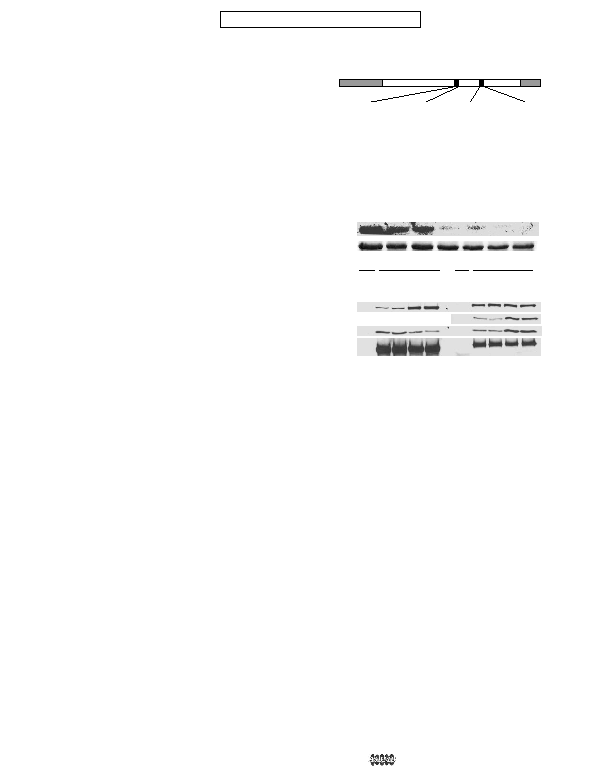
FLAG-PR70 interacted with both GST-A and GST-Cdc6 but
not GST alone (Fig. 2C, lanes 1–2 and 6 –7). Compared with
lysates prepared with standard buffer or EGTA, the addition of
calcium enhanced the binding of PR70 to GST-A, but not to
GST-Cdc6 (Fig. 2C, lanes 4 and 9). Although calcium did not
enhance the binding of PR70 to GST-Cdc6, it did cause a sig-
nificant increase in the amount of A- and C-subunits associated
with GST-Cdc6 (Fig. 2C, lanes 9 and 10). Although an excess of
calcium was used in the experiments shown in Fig. 2C, other
experiments showed that enhanced binding of the AC core
dimer was also observed at calcium concentrations of 100
experiments were performed with the calcium-binding
mutants. Compared with assays in the presence of EGTA, the
PR70 and the EF1 mutant to GST-A, but not to GST-Cdc6 (Fig.
3A and B, lanes 2–5). Although it did not increase the amount of
PR70 or the EF1 mutant associated with Cdc6, calcium did
increase the association of the A- and C-subunits with GST-
Cdc6 (Fig. 3B, lanes 2–5). Mutation of EF2 or mutation of both
EF1 and EF2 resulted in loss of the calcium-enhanced binding
of PR70 to GST-A (Fig. 3A, lanes 6 –9) and the calcium-depend-
ent association of the A- and C-subunits with GST-Cdc6 (Fig.
3B, lanes 6 –9).
COS-7 cells. Both wild-type PR70 and the EF1 mutants inter-
acted with endogenous PP2A (Fig. 3C, lanes 2– 4). The EF1(-z)
mutant interacted as well as wild-type PR70, but interaction of
the EF1(x,y) mutant was reduced suggesting that mutation of
the x and y residues causes a structural defect in PR70. Muta-
tion of EF2, or both EF1 and EF2, resulted in a nearly complete
A, the figure shows a diagram of the location and sequences of wild-type
PR70 (WT) and PR70 mutants containing substitutions of calcium-binding
residues within the EF-hand motifs (EF mutants). The canonical EF-hand resi-
dues involved in coordination of calcium are indicated by the letters x, y, z, -x,
-y, and -z using standard nomenclature (28). The x, y, and -z residues that were
mutated are shown in bold type. B, GST fusions of wild-type PR70 (PR70) and
the EF-hand mutant were analyzed for calcium binding by
gel with Coomassie Brilliant Blue (CBB). C, calcium enhances binding of PR70
to the A-subunit of PP2A but not to Cdc6. FLAG-PR70 and the indicated EF-
hand mutants were transiently expressed in COS-7 cells, and the cells were
lysed in standard buffer (N) or lysis buffer containing EGTA (E) or CaCl
teins were detected by immunoblotting with anti-FLAG (FLAG-PR70), anti-A-
subunit (A), anti-C-subunit (C), and anti-GST (GST) antibodies.