Verification of
Machine Learning Models
Methods for verifying and validating neural networks, including object detectors, vision transformers and multimodal models, with a focus on robustness and scalability.
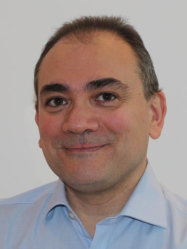
Professor of Safe Artificial Intelligence
Imperial College London
Royal Academy of Engineering Chair in Emerging Technologies
Developing scalable verification methods and formal guarantees for machine learning models, autonomous AI agents and neuro-symbolic systems.
Explore our research
From formal logic to verifiable AI systems.
Research
Methods for verifying and validating neural networks, including object detectors, vision transformers and multimodal models, with a focus on robustness and scalability.
Verification methods for agents in uncertain environments, including perception, memory, and learning, now extending to multimodal agents and physical AI.
Methods for verifying systems that combine learned components with symbolic and probabilistic reasoning, with an emphasis on end-to-end robustness guarantees.
Selected themes and transitions in the research programme.
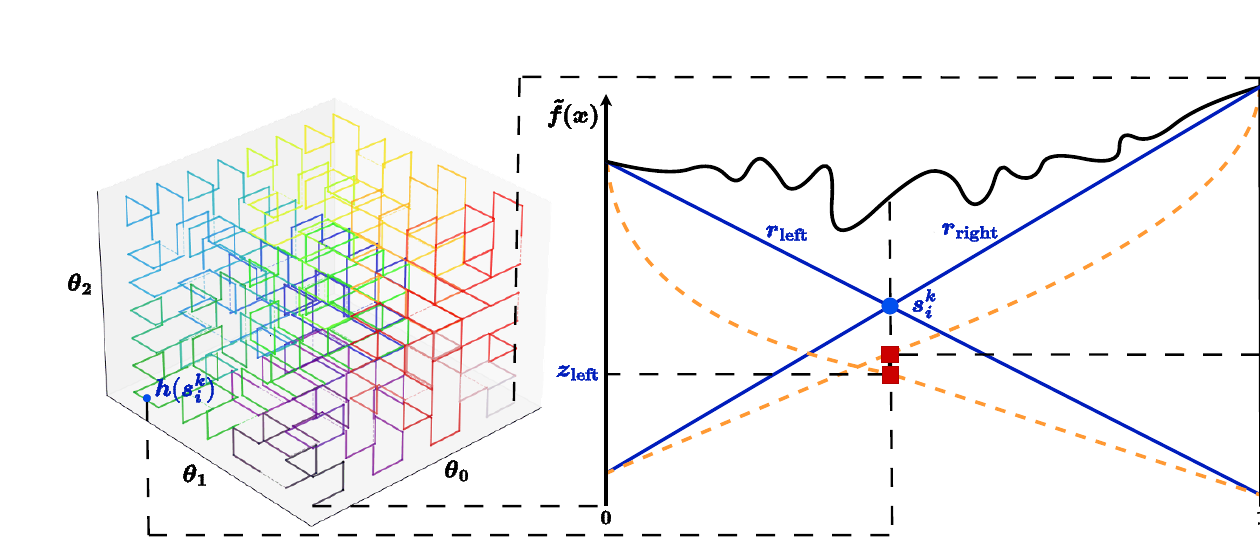
NeurIPS 2025
H²V validates geometric robustness in large image and video models, scaling to 300 million tunable parameters. A separate 2026 preprint extends the approach to VLMs and VLAs with up to 32 billion parameters.
Explore this work
ECCV 2026
Formal robustness verification for anchor-based SSD and YOLO detector variants under brightness, contrast and motion-blur perturbations.
Explore this work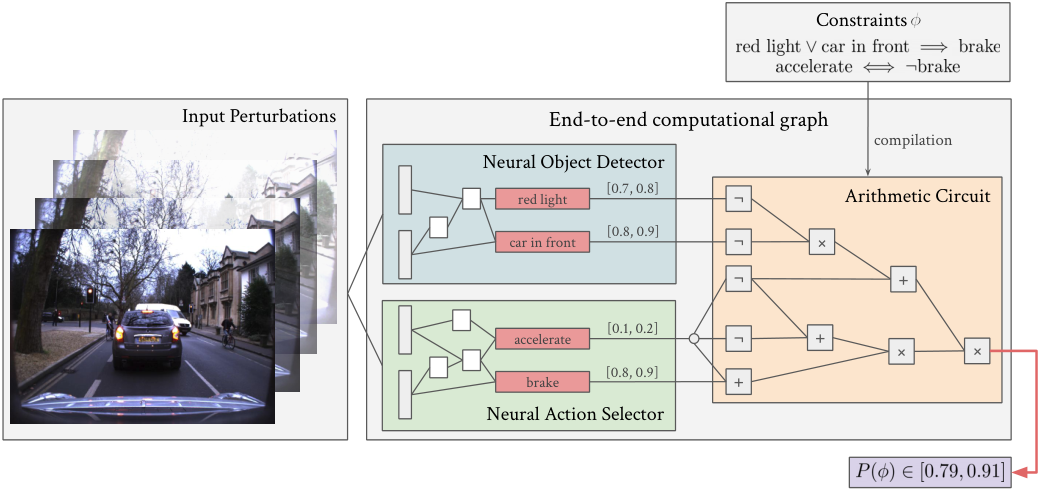
NeurIPS 2026 — forthcoming
End-to-end robustness verification across learned perception and symbolic automata, extending our NeSy 2025 Outstanding Paper Award work.
Explore this workProgramme committees, editorial work, research initiatives and industrial engagement.
View activitiesFully funded PhD opportunities are available in areas related to verifiable AI.
Further informationAcademic biography, appointments, selected honours, roles and contact information.
About me